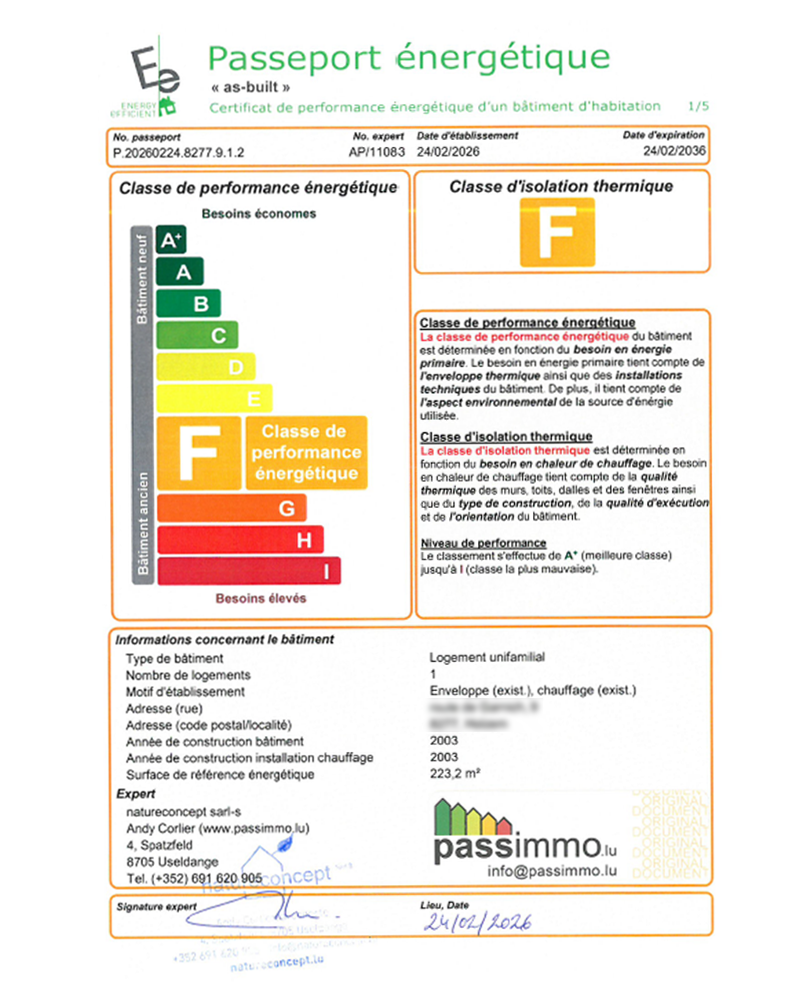
Energy Passport | Energy Performance Certificate (EPC)



The Energy Performance Certificate (EPC) is an official document required when selling or renting a property in Luxembourg. It evaluates the building’s energy performance based on objective criteria: insulation, heating systems, ventilation, airtightness, orientation, and more.
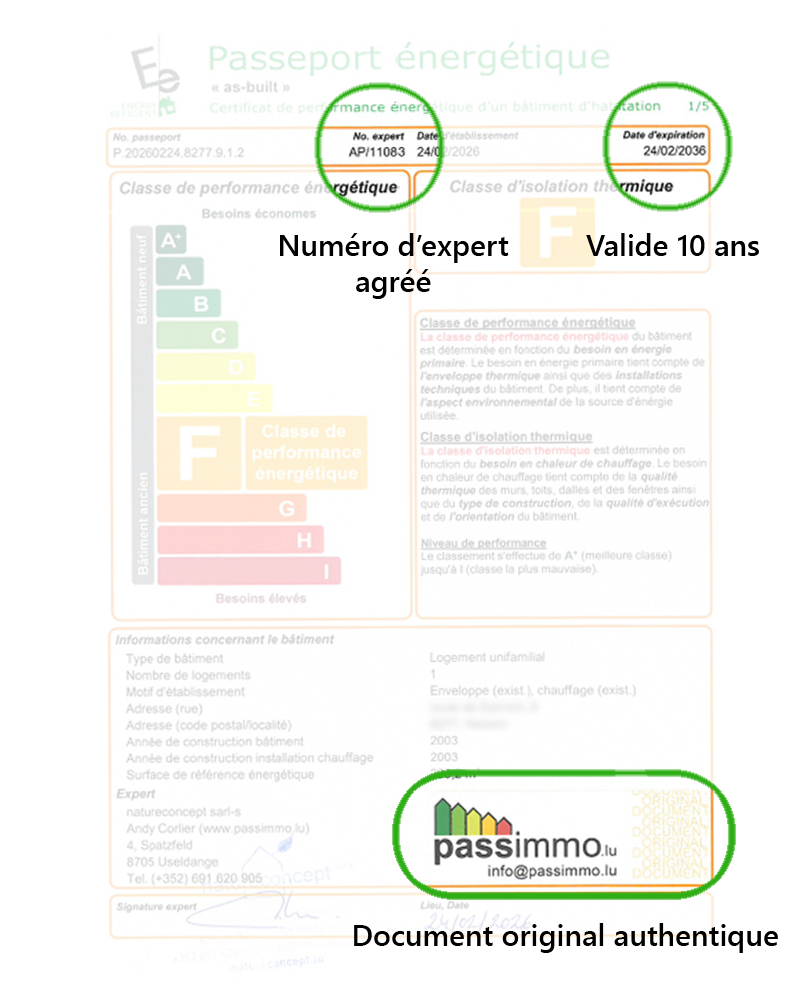
The EPC is valid for 10 years, unless major renovations significantly modify the building’s energy performance. It must be issued by a certified expert, following the standards defined by the Administration of the Environment and Energieagence.
Our certificates are produced with rigour, transparency, and full compliance with legal requirements, ensuring reliable and recognised documentation.
In which situations is the Energy Passport required?
It is required for any new construction, extension, major renovation, as well as for a sale or a new rental.Is the EPC mandatory when selling or renting a property?
Yes. The EPC must be presented at the time of listing the property for sale or rent, and attached to the notarial deed or rental contract.What is the purpose of the Energy Performance Certificate?
The EPC provides clear information about a building’s energy efficiency, helping distinguish low‑consumption properties from more energy‑intensive ones. It also encourages improvements in thermal insulation, airtightness, and technical equipment.How long is the certificate valid?
The EPC is valid for 10 years, unless major works change the building’s energy performance.Which documents do I need to provide?
The building plans (floor plans, sections, elevations). If you do not have them, we can issue the certificate without plans.How long does the on‑site visit take?
Usually 30 to 60 minutes, depending on the building size. The visit is non‑intrusive and requires no special preparation.When will I receive my certificate?
Expect around one week after the visit. The document is delivered only after payment is received.What are the energy performance classes?
Buildings are classified from A+ (excellent) to I (poor). Since 2017, all new constructions must reach NZEB level, generally equivalent to AAA.What is the difference between Ecopass (Ökopass, Oeko‑Pass) and the EPC?
The official term for assessing a building’s energy efficiency is the Energy Performance Certificate (EPC), also called the Energy Passport. The term Ecopass does not appear in any official regulation: “eco” refers to ecology, a much broader concept (water, materials, environment, etc.). Note: Oeko‑Pass is also the name of a public transport subscription, unrelated to the EPC.Do I need a new EPC for an ongoing rental?
No. The certificate is required only for new rental contracts. When a tenant changes, a copy of the existing EPC must be provided.Does the Energy Passport need to be displayed or handed over?
Yes. When a property is sold, the original EPC must be handed to the new owner. For rentals, a certified copy must be given to the new tenant. For public or municipal buildings over 1000 m², the certificate must be visibly displayed at the building entrance.How can I improve my building’s energy class?
The most effective actions: better insulation, high‑performance windows, efficient heating (heat pump), renewable energy, LED lighting, mechanical ventilation with heat recovery. An energy audit helps define priorities.